
Introduction:
The Sudden Shock of Finding an Orange Spot:
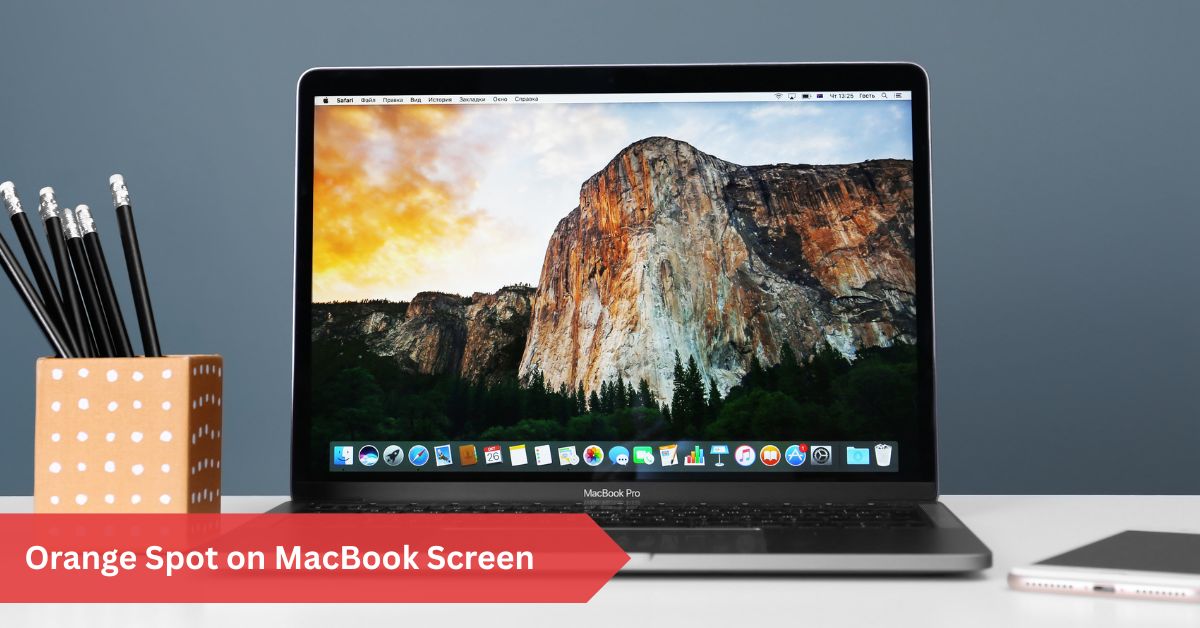
You open your sleek MacBook to begin your day, and suddenly, there it is — a strange orange spot staring back at you from the screen. It’s not dust, it’s not a reflection, and it certainly wasn’t there yesterday. For most Mac users, discovering an orange spot on the MacBook screen is both confusing and frustrating. It instantly raises concerns: “Is my display damaged? Is this permanent? Can I fix it myself, or do I need a new screen?”
Ignoring an orange spot on MacBook screen for too long can lead to permanent discoloration or even costly screen damage. What may start as a small, faint patch can gradually expand as heat, pressure, or adhesive breakdown worsens over time. Addressing the issue early helps preserve your display’s clarity and color accuracy.
Why This Issue Deserves Attention:
Apple’s Retina and Liquid Retina displays are renowned for their stunning clarity and precise color reproduction. However, like all electronic components, they’re not immune to defects or damage over time. An orange spot might seem like a minor annoyance, but it can indicate deeper problems such as adhesive breakdown, pixel burnout, or even liquid residue trapped under the glass. Addressing it early is essential because neglecting it can cause the discoloration to expand, affecting visual comfort and overall device usability.
A well-maintained display isn’t just about aesthetics — it’s also about performance and device longevity. Understanding why this orange spot appears and learning safe ways to fix or prevent it can help you extend your MacBook’s lifespan while avoiding expensive repair costs.
In This Article, we discuss “Orange Spot on MacBook Screen.”
Understanding the Orange Spot Phenomenon:

What Exactly Is the Orange Spot on a MacBook Screen?
An orange spot on a MacBook screen typically manifests as a faint or bright patch that doesn’t disappear with cleaning. It lies beneath the glass surface, caused by internal screen components rather than dirt or fingerprints. The spot may change slightly in brightness or tone as your MacBook heats up or cools down, but it doesn’t vanish completely.
For many users, it looks like a glowing bruise or heat mark that becomes more visible against white or light backgrounds. The phenomenon is subtle at first but can grow more noticeable over time — particularly on older MacBooks or devices used intensively for long hours.
Common Areas Where It Appears:
While the orange tint can appear anywhere, users frequently report it:
- Near the bottom or left side of the display
- Around the trackpad area (where heat often accumulates)
- Near the screen edges or corners
- Occasionally in the center, especially above the logic board
These areas align closely with zones of consistent warmth or pressure when the device is closed or carried.
Orange vs. Yellow vs. Brown Spots:
Color differences reveal important clues:
- Orange spots often point to adhesive or heat-related issues.
- Yellow spots may be caused by backlight inconsistency or display aging.
- Brown spots usually result from severe overheating or long-term moisture exposure.
Distinguishing these shades helps determine whether a simple calibration can fix the issue or if professional repair is inevitable.
What Causes Orange Spots on MacBook Screens?
1. Heat Exposure and Trapped Warmth:
Heat remains the most common culprit. When the MacBook is used for long sessions on soft surfaces (like beds or couches), airflow is restricted, leading to localized overheating. The internal adhesive bonding the LCD layers can warp, causing visible orange or amber tints.
Apple’s thin aluminum chassis, while efficient for cooling, can trap residual heat during high-performance tasks, particularly near the GPU and logic board. Over time, that trapped warmth can create semi-permanent “burn marks” on the display layers.
2. Screen Pressure or Crushing Damage:
MacBook screens are ultra-thin and delicate. Even modest pressure — such as stacking objects on a closed MacBook or over-tight backpack straps — can compress the internal layers. This often leaves behind uneven discoloration that looks like orange or yellow patches, especially near the center of the display.
3. Screen Layering or Manufacturing Defect:
Some older Retina models suffered from adhesive inconsistencies during manufacturing. A minor imperfection in the lamination or polarizer film can lead to uneven light diffusion. These factory defects might take months or years to become visible, but are often recognized as the root of the problem.
4. Dead or Stuck Pixels:
Every display pixel comprises red, green, and blue sub-pixels. If the green sub-pixel fails, the combination of red and blue light can appear as an orange dot. While these are usually small and isolated, multiple stuck pixels can create an obvious orange tint.
5. Backlight Bleeding:
Uneven backlight diffusion causes orange or yellowish glow patches around edges or corners. It becomes most visible in dark rooms or against black backgrounds.
6. GPU or Logic Board Malfunction:
If the graphics processor malfunctions, color rendering errors can appear on the display. In such cases, orange spots might appear transiently — changing when you move windows or restart macOS. This usually signals a hardware-level GPU issue.
7. Adhesive and Lamination Breakdown:
Apple uses a strong optical adhesive to bond layers within the display. Prolonged exposure to heat or humidity can break this down, creating discolored zones that appear orange or rust-like.
Identifying Whether It’s a Software or Hardware Issue:

1. Screenshot Test:
Take a screenshot (Command + Shift + 4) and open it on another device:
- If the spot appears in the screenshot → it’s a software problem.
- If it does not appear → it’s likely hardware damage.
2. External Display Mirroring:
Connect your MacBook to an external monitor using HDMI or AirPlay.
If the orange area is absent externally, the issue resides in your MacBook’s display hardware.
3. Use macOS Diagnostics:
Built-in Apple diagnostics, like Mac Resource Inspector (MRI) can analyze your backlight and pixel output. This helps confirm whether the issue is internal or GPU-related.
4. Software Glitch Indicators:
Color anomalies that flicker, move, or disappear after restarting usually point to a macOS color profile or rendering bug — not permanent hardware failure.
DIY Fixes for Orange Spots on MacBook Screen:
1. Gentle Cleaning:
Use a microfiber cloth with a small amount of screen-safe cleaner. Never apply pressure — this could worsen the damage if the issue is internal.
2. Resetting SMC and NVRAM:
This step often resolves power-related or brightness irregularities:
- Shut down your MacBook.
- Press and hold Shift + Control + Option + Power for 10 seconds (Intel models).
- Release and restart.
3. Run Apple Diagnostics:
Hold Command + D during startup to test for display or GPU faults. Any detected issue will be logged with a reference code for Apple Support.
4. Adjust Display Calibration:
Go to System Settings → Displays → Color Profile. Recalibrate your screen to balance warmth and brightness. Some users find the orange tone less visible after adjustment.
5. Cooling or Heat Redistribution:
Gently cooling the MacBook or using a soft heat source (like a warm compress) for a few seconds can sometimes redistribute internal materials. However, this is temporary and not recommended as a long-term fix.
Professional and Authorized Repair Solutions:

When to Seek Professional Help:
If the orange spot persists or spreads, schedule a Genius Bar visit. Apple technicians can determine if your device is eligible for a screen replacement under warranty or a service program.
AppleCare+ and Warranty Options:
If Apple confirms adhesive or backlight defects, your display may be replaced free of charge. However, external pressure or heat damage is generally not covered unless it is deemed a defect.
Third-Party Repairs vs. Apple Authorized Service:
Third-party repair shops may offer cheaper replacements, but they often use non-genuine screens. This can affect brightness, color quality, and even void your AppleCare coverage.
Screen Replacement:
If diagnosed as an LCD panel fault, Apple replaces the entire top assembly (screen + lid). It’s costly but guarantees a flawless result.
Conclusion:
An orange spot on MacBook screen is a warning sign — often linked to heat, pressure, or adhesive breakdown. While minor cases may fade, persistent spots need professional attention. Protect your device by avoiding heat buildup, cleaning gently, and using it on firm, ventilated surfaces. Acting promptly ensures your MacBook remains reliable, vibrant, and free from display blemishes.
FAQs:
1. What causes an orange spot on MacBook screen?
Orange spot is usually caused by trapped heat, pressure damage, or adhesive breakdown between the display layers. These factors distort the light passing through the screen, leading to a visible orange or amber tint that doesn’t wipe away.
2. Can I fix the orange spot myself?
Minor spots may fade after cooling or calibration, but deep discolorations typically require professional repair or screen replacement. Attempting DIY fixes with heat or pressure can worsen the damage and void your warranty.
3. Is this covered under Apple’s warranty?
If it’s a manufacturing or adhesive defect, Apple may repair or replace the screen under warranty. However, if the discoloration results from misuse or heat exposure, it’s generally considered accidental damage.
4. How can I prevent orange spots in the future?
Keep your MacBook cool, avoid pressing on the screen or lid, and store it in a well-ventilated, protective case. Regularly cleaning the screen and maintaining airflow during heavy use can also help prevent internal heat buildup.
5. Should I continue using my MacBook with the orange spot?
Yes, if it doesn’t interfere with visibility — but monitor it closely. If the spot expands or changes color, it’s a sign of internal deterioration and should be inspected immediately by an Apple technician.
Read More:
Lossless Scaling Keyboard Shortcuts: The Complete Guide
Resume with No Experience: Simple Steps to Fix It
Toyota vs Honda Reliability: A Complete Guide
Parental Opt-Out Rights in Education: A Complete Guide
How to Tell If Eggs Are Bad: The Ultimate Guide