
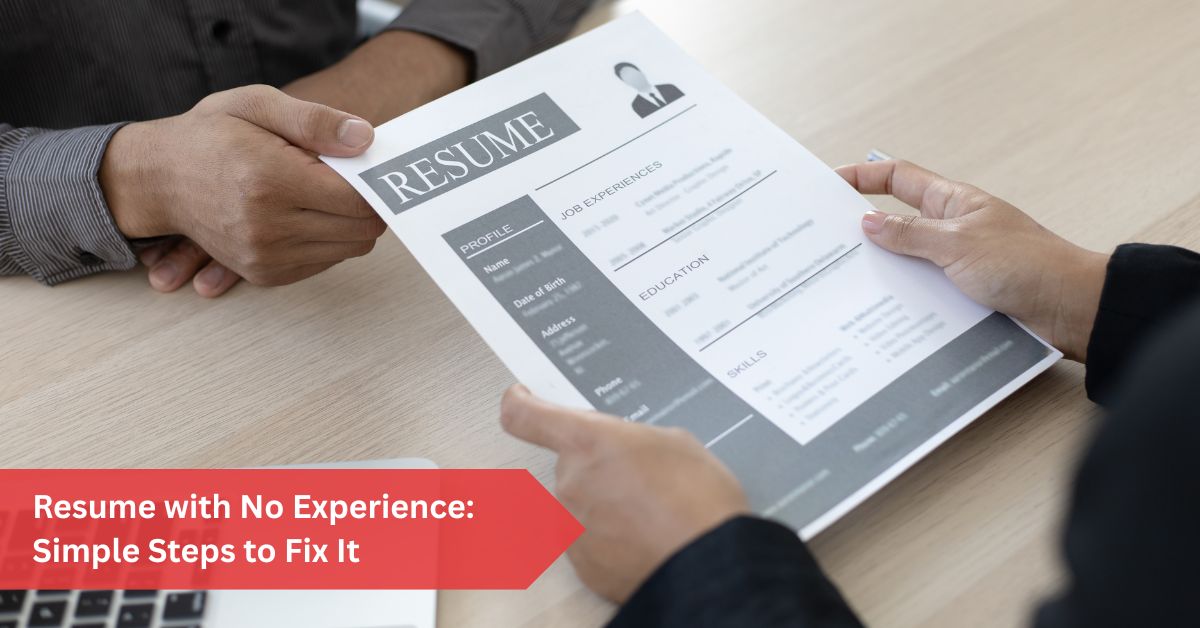
Introduction:
Starting a job hunt can feel intimidating—especially when you’re trying to write a resume with no experience. Many students, career changers, or first-time job seekers sit staring at a blank page thinking, I don’t have anything to put on my resume. The truth is, everyone has something to offer. Employers aren’t just looking for years of work history—they value potential, adaptability, and a willingness to learn.
Even without experience, you can build a strong resume by highlighting education, skills, volunteer work, projects, and certifications to show potential. Tailor each section to the job you’re applying for to stand out. Use a clean format and strong action verbs to make your resume more impactful.
Having a resume with no experience doesn’t mean you have nothing to show. It’s all about presenting what you do have in the right way. By focusing on transferable skills, education, and achievements outside of formal jobs, you can prove you’re ready to add value. This guide will share practical tips, examples, and templates to help turn I don’t have anything to put on my resume into confidence and opportunity.
In This Article, we discuss “Resume with No Experience.”
Why You Feel Like You Have a Resume with No Experience:
Before jumping into the steps, it’s important to understand why so many people believe they don’t have relevant experience. When candidates say I don’t have anything to put on my resume, it’s usually because of one or more of these reasons:
- Lack of formal job experience – You might never have had a full-time role before.
- Jobs unrelated to your target role – Past work may seem disconnected from the position you want now.
- Not recognizing informal experience – Volunteer work, school projects, internships, or even hobbies often get overlooked.
- Comparisons to others – Seeing “perfect resumes” online can make you underestimate your own.
- Perfectionism – Believing that only “big” achievements count when small contributions are just as important.
In reality, a resume with no experience is rarely truly empty. It often comes down to perspective and presentation.
Step 1: Shift Your Mindset:
The very first step in writing a resume with no experience is changing how you think. If you keep repeating I don’t have anything to put on my resume, you’re closing yourself off from recognizing valuable skills and experiences you already have.
Ask yourself:
- Have I ever led or contributed to a school project?
- Have I volunteered, even for a short period?
- Do I have hobbies that developed teamwork, problem-solving, or creativity?
- Have I completed online courses or certifications?
- Did I help someone with bookkeeping, event planning, or tutoring?
Each of these counts. Employers aren’t only interested in formal experience—they want to see skills, potential, and adaptability. By reframing your mindset, you’ll quickly realize your resume isn’t blank at all.
Step 2: Highlight Your Education:
When building a resume with no experience, education often becomes your strongest foundation. Whether you’re a student, recent graduate, or career changer, your academic background shows discipline, commitment, and growth.
What to include in your education section:
- Coursework relevant to your target job
- Honors or awards (Dean’s list, scholarships, etc.)
- Extracurricular activities (clubs, student organizations, leadership roles)
- Research projects, papers, or thesis work
Example:
Bachelor of Arts in English Literature
XYZ University – Graduated 2024
- Completed coursework in communication, research methods, and creative writing
- Member of Debate Society (developed strong public speaking and critical thinking skills)
- Senior thesis on Media Representation and Culture
Even if you think I don’t have anything to put on my resume, education highlights years of structured learning and shows employers that you have a foundation of knowledge to build on.
Step 3: Showcase Skills Instead of Job Titles:
If your resume with no experience feels light, your skills section can carry the weight. Many candidates undervalue their transferable skills, but these can be just as important as technical ones.
Examples of transferable skills to list:
- Communication
- Leadership
- Problem-solving
- Time management
- Customer service
- Event organization
- Social media management
- Basic IT/software knowledge
A well-structured skills section reassures employers that even without years of professional experience, you bring abilities they can use immediately.
Step 4: Include Volunteer and Unpaid Experience:

One of the biggest mistakes people make when they say I don’t have anything to put on my resume is ignoring unpaid work. Volunteering, internships, and community service are highly valuable to recruiters.
Examples of volunteer/unpaid experience to include:
- Helping organize a charity event or fundraiser
- Tutoring classmates or mentoring juniors
- Assisting in a family business (inventory, bookkeeping, customer service)
- Serving in a religious or community group
- Coordinating events at school or in the neighborhood
Recruiters know that volunteering requires the same skills—teamwork, reliability, communication—that paid roles do. Showing this can make your resume with no experience look far stronger.
Step 5: Use Projects and Hobbies:
Hobbies are often dismissed as “personal interests,” but when framed correctly, they demonstrate valuable skills. If you’re struggling with the thought I don’t have anything to put on my resume, look at your hobbies differently.
Examples:
- Building websites → Shows technical and design ability.
- Running a personal blog → Demonstrates writing, consistency, and communication
- Gaming competitively → Highlights strategy, teamwork, and focus.
- Playing sports → Proves discipline, leadership, and fitness.
Adding projects and hobbies to your resume with no experience makes it more complete, while also showing your personality and initiative.
Step 6: Consider High School Achievements
For those who are very early in their career, high school experiences are still worth mentioning. Employers don’t expect extensive experience from entry-level applicants.
Examples of what to add:
- Leadership roles (captain, president, prefect)
- Academic awards and honors
- Part-time jobs (cashier, babysitting, tutoring)
- Participation in community events or competitions
It’s far better to include these than leave your resume blank.
Step 7: Choose the Right Resume Format:
When creating a resume with no experience, the format matters more than ever. The wrong format can draw attention to what’s missing instead of what you have.
Best formats to use:
- Functional Resume – Focuses on skills rather than chronological job history
- Combination Resume – Balances skills, education, and projects
These formats let you emphasize strengths while downplaying gaps.
Step 8: Add a Strong Summary or Objective in a Resume with No Experience:

A well-written resume summary or objective can make up for a lack of experience by immediately showing enthusiasm and potential.
Example:
Detail-oriented and motivated recent graduate with strengths in collaboration, communication, and problem-solving. Seeking an opportunity to contribute to business goals while enhancing my skills.
This shifts the focus away from I don’t have anything to put on my resume toward what you can offer.
Step 9: Get References and Recommendations:
References can provide credibility when your resume with no experience feels thin. You don’t need past employers—professors, mentors, supervisors from volunteer work, or even family business managers can vouch for your skills and character.
Step 10: Keep It Honest and Professional:
Some people fall into the trap of exaggerating or lying when they feel like they have a resume with no experience. Resist this temptation. Employers value honesty, and small but truthful achievements are always better than fake ones.
Additional Tips to Strengthen a Resume with No Experience:
- Tailor it for each job – Use keywords from the job description.
- Keep it clean and structured – Use bullet points, bold headings, and consistent formatting.
- Limit to one page – Simplicity beats clutter.
- Add certifications – Platforms like Coursera, LinkedIn Learning, and Google offer free courses.
- Create a portfolio – Even small projects can be showcased online.
Common Mistakes to Avoid:
- Leaving the resume blank because you think I don’t have anything to put on my resume
- Using an overly casual tone or poor formatting
- Lying about experience
- Overstuffing irrelevant details
- Forgetting a cover letter to explain your motivation
Step 11: Use Personal Projects as Proof of Skills:
Personal projects are an excellent way to strengthen a resume with no experience. They show initiative, creativity, and practical application.
Examples:
- Building a personal website or blog → Proves design, writing, and marketing skills.
- Designing graphics for social media → Demonstrates creativity and software knowledge.
- Launching a YouTube channel or podcast → Highlights communication and consistency.y
- Repairing electronics for friends/family → Shows technical problem-solving
- Running an online shop → Demonstrates business and customer service skills.ls
By framing hobbies as projects, you elevate them into meaningful accomplishments.
Step 12: Add Certifications and Online Learning:

In the digital age, online certifications can quickly fill gaps in your resume with no experience. Free and low-cost platforms make it easy to build credibility.
Examples of valuable certifications:
- Google Digital Garage → Digital marketing, career development
- LinkedIn Learning → Business, design, and technology
- Coursera → University-level courses across fields
- HubSpot Academy → Marketing, sales, and customer service
- Microsoft Learn → IT and software certifications.
Imagine saying in an interview: I may have a resume with no experience, but I’ve completed five professional certifications in the last six months. That instantly shows initiative and commitment.
Conclusion:
Believing that you have a resume with no experience or thinking I don’t have anything to put on my resume is more about mindset than reality. Every person has skills, projects, and experiences that can be framed effectively. Whether it’s education, volunteer work, hobbies, or certifications, each contribution adds value.
Remember, employers aren’t only looking for long job histories. They want to see potential, motivation, and a willingness to learn. With the right strategy, even a resume with no experience can show that you’re prepared to contribute meaningfully.
FAQs:
1. What should I do if I have a resume with no experience?
If you feel like you have a resume with no experience or keep saying I don’t have anything to put on my resume, focus on your education, skills, volunteer work, hobbies, and projects. Employers want potential and effort, not just past job titles.
2. Should I put volunteer work on my resume?
Yes, volunteering is highly valuable. It shows teamwork, responsibility, and initiative. If you’re worried about having a resume with no experience, volunteer work can fill that gap effectively.
3. Should I list hobbies on my resume?
Yes, if they demonstrate transferable skills. For example, writing a blog shows communication skills, while playing sports highlights teamwork and discipline. They’re especially useful when you feel like you don’t have anything to put on your resume.
4. How do I write a resume without work experience?
Choose a functional or combination format. Highlight your skills, education, certifications, and projects. Even if you’re building a resume with no experience, presentation and structure can make your strengths stand out.
5. Can online courses and certifications go on my resume?
Absolutely. Certifications from platforms like Google, Coursera, and LinkedIn Learning are excellent additions. They show self-motivation and continuous learning—qualities employers appreciate in candidates with a resume with no experience.
Read More:
Toyota vs Honda Reliability: A Complete Guide
Parental Opt-Out Rights in Education: A Complete Guide
How to Tell If Eggs Are Bad: The Ultimate Guide
What to Pack for Your Europe Trip: The Ultimate Europe Packing List
Virtual Meeting Etiquette: Essential Rules for Professional Online Communication